Read the Label Before You Swallow: 5 Supplement Ingredients and Tricks That Scream 'Put It Back'
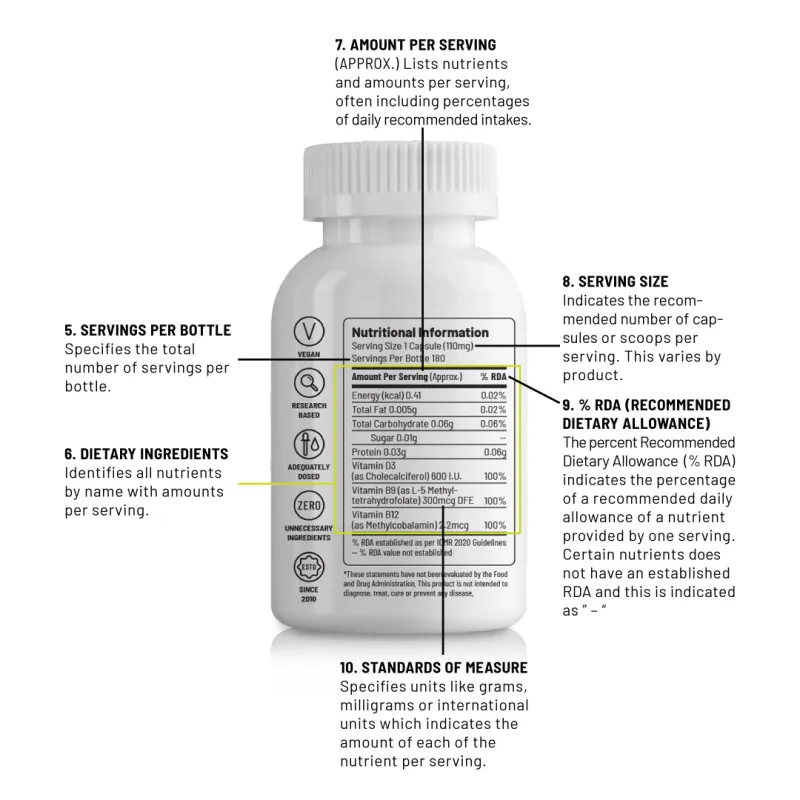
Photo: supplement bottle nutrition label reading close up, via cdn.shopify.com
Supplement shelves are a masterclass in persuasion. Bold claims, clinical-sounding language, and bottles that look like they came from a pharmacy. But flip that bottle around, and the real story is on the label — if you know what to look for.
Here are five red flags that should make you put a product back on the shelf.
1. The Proprietary Blend
You see it written as something like 'Metabolic Boost Complex — 850 mg.' Sounds impressive, right? Here's the problem: that single number covers five, ten, sometimes twenty ingredients, and the manufacturer doesn't have to tell you how much of each one is in there.
That means the star ingredient — the one with the research behind it — could be 5 mg of an 850 mg blend, with the rest being cheap fillers. Real-world example: plenty of 'fat burner' blends list green tea extract first on paper but bury the effective 500 mg dose somewhere in the middle.
What to look for instead: every ingredient listed with its own individual dose. Full transparency, no exceptions.
2. Fairy-Dust Dosing
Sometimes brands do list doses — they're just comically small. You'll see a trendy ingredient like ashwagandha or turmeric at 50 mg, when the studies showing benefits used 300 to 600 mg or more.
This is called 'fairy dusting': sprinkling in a famous ingredient at a dose too low to do anything, purely so it can appear on the front label. You're paying a premium for a name, not an effect.
What to look for instead: doses that match what the actual research used. If the label doesn't come close to study doses, the ingredient is decoration.
3. Vague 'Complexes' and 'Matrices'
Words like 'Immune Support Blend,' 'Antioxidant Matrix,' or 'Adaptogenic Complex' sound scientific but tell you almost nothing. What's in it? At what amounts? Which part does what?
A vague name is doing exactly what it's designed to do: create an impression while dodging accountability. Legitimate manufacturers are proud to spell things out.
What to look for instead: specific, standardized extracts — like 'curcumin 95%' or 'bacognize bacopa 300 mg' — rather than mystery bundles.
4. Filler Overload and Flow Agents
Look at the 'other ingredients' section. A little rice flour or a capsule material is normal. But when the inactive list runs longer than the actives — titanium dioxide, artificial colors, a parade of coatings — you're buying packaging and chemistry, not nutrition.
Artificial dyes in particular have no business in a health product, and some fillers can bother people with sensitivities.
What to look for instead: short inactive lists and clean capsule or tablet materials. Fewer moving parts, fewer problems.
5. Missing Third-Party Verification
This one isn't an ingredient — it's what's missing. Supplements in the US aren't FDA-approved before hitting shelves, which means what's on the label isn't guaranteed to be what's in the bottle. Independent testing has repeatedly found products with far less (or far more) active ingredient than advertised, and occasional contamination.
What to look for instead: seals from NSF Certified for Sport, USP, or Informed Choice. These mean an outside lab actually checked the product.
The Bottom Line
A good supplement label is boring. Specific doses, individual ingredients, minimal fillers, and a third-party seal. If a bottle is trying to dazzle you instead of inform you, that's the tell. Flip it over, read the fine print, and let the label — not the marketing — make the decision.