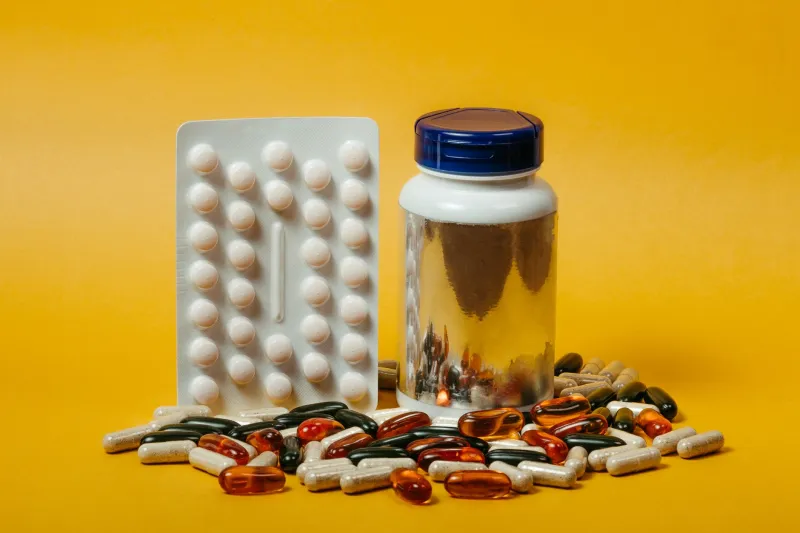
Mixing Supplements and Prescriptions? Here's What Your Doctor Probably Never Asked You
Picture this: you're at your annual checkup, the doctor runs through the usual questions, and somewhere in the blur of blood pressure readings and cholesterol talk, nobody ever gets around to asking what's sitting on your bathroom shelf next to your Lipitor. Sound familiar? You're not alone.
A 2020 survey published in the Journal of the American Medical Association found that roughly 70% of Americans who take dietary supplements don't tell their doctors about it. Meanwhile, about half of U.S. adults take at least one prescription drug. Do the math, and you've got an enormous chunk of the population quietly mixing pharmaceuticals and supplements — sometimes with consequences nobody anticipated.
This isn't a scare piece. Some supplement-drug combinations are genuinely dangerous. Others get wildly overstated. The goal here is to help you figure out which category your own cabinet falls into.
The Heavy Hitter Nobody Talks About: St. John's Wort
If there's one supplement that pharmacists lose sleep over, it's St. John's Wort. Widely sold as a natural mood booster — and legitimately studied for mild-to-moderate depression — this herbal extract has a dirty little secret: it's one of the most potent activators of a liver enzyme called CYP3A4.
Why does that matter? Because CYP3A4 is responsible for metabolizing somewhere between 30% and 50% of all prescription drugs on the market. When St. John's Wort cranks that enzyme into overdrive, your body starts clearing certain medications way faster than intended. The drug leaves your system before it can do its job.
The list of affected medications is long and includes some heavy hitters:
- Hormonal birth control — reduced effectiveness, meaning unintended pregnancy risk is real
- Blood thinners like warfarin — lower drug levels can leave clot risk unmanaged
- HIV antiretrovirals — dangerously reduced plasma concentrations
- Cyclosporine (used after organ transplants) — transplant rejection has been documented
- Certain antidepressants (SSRIs) — combining the two can trigger serotonin syndrome, a potentially life-threatening condition
This one isn't overstated. If you're on any chronic medication, St. John's Wort deserves a real conversation with your pharmacist before you open the bottle.
Ginseng: The 'Energy Herb' With a Blood-Thinning Side
American and Asian ginseng are staples of the supplement aisle, marketed mostly for energy, focus, and immune support. For most healthy people taking them solo, they're reasonably well-tolerated. Add a prescription medication to the picture, though, and things get more complicated.
Ginseng has mild antiplatelet properties — meaning it can slow blood clotting. On its own, that's not dramatic. But pair it with blood thinners like warfarin or aspirin therapy, and you may be amplifying anticoagulant effects in ways that raise bleeding risk. There are also documented cases of ginseng reducing the effectiveness of warfarin in some individuals, which cuts the other direction entirely. The inconsistency is part of what makes it tricky.
There's also evidence that ginseng may affect blood sugar regulation, which matters a lot if you're managing diabetes with metformin or insulin. It can push glucose lower — sometimes in ways that interact unpredictably with your medication dosing.
The interaction risk here is real but more situational than St. John's Wort. If you're on anticoagulants or diabetes medications, bring it up with your prescriber. If you're otherwise healthy and not on anything chronic, moderate ginseng use is unlikely to cause problems.
Ginkgo Biloba: Popular, Promising, and Potentially Problematic
Ginkgo is one of the best-selling supplements in the country, driven largely by its reputation for supporting memory and circulation. The research on its cognitive benefits is actually more mixed than the marketing suggests — but that's a separate conversation.
What's more immediately relevant here is ginkgo's effect on blood. Like ginseng, it has antiplatelet activity, and that activity is meaningful enough that the interaction with blood thinners is well-documented. Combining ginkgo with warfarin, clopidogrel (Plavix), or even regular NSAID use (think ibuprofen or naproxen) can increase bleeding risk — including the rare but serious risk of spontaneous bleeding events.
Ginkgo also appears to interact with certain seizure medications, potentially lowering the seizure threshold in some people. If you're on anticonvulsants, that's not a combination to experiment with casually.
The Combinations That Get Overstated
Fair is fair — not every supplement-drug pairing you'll read about online is worth losing sleep over. A few worth putting in perspective:
Fish oil and blood thinners: There's theoretical concern here, and you'll see it flagged everywhere. In practice, the clinical evidence for meaningful bleeding risk at typical supplement doses (1–3g daily) is pretty weak. Most cardiologists actually recommend fish oil alongside standard cardiac medications. Still worth mentioning to your doctor, but not a reason to panic.
Vitamin D and most medications: Unless you're taking very high doses (we're talking 10,000+ IU daily) or have specific kidney conditions, vitamin D supplementation rarely causes meaningful drug interactions. The widespread caution around this one is largely overblown.
Magnesium and antibiotics: Magnesium can reduce absorption of certain antibiotics (particularly tetracyclines and fluoroquinolones) if taken at the same time. The fix is simple — separate them by two hours. It's less an interaction and more a timing issue.
A Practical Framework for Checking Your Own Situation
You don't need a medical degree to get smarter about this. Here's a straightforward approach:
1. Make a complete list. Write down every supplement, herb, and vitamin you take — including the dose and frequency. Don't forget the stuff you think of as harmless (fish oil, melatonin, multivitamins).
2. Use a pharmacist, not just Google. Your local pharmacist is genuinely one of the most underutilized resources in American healthcare. They have access to interaction databases and are trained specifically to catch these conflicts. It's free, and it takes about five minutes.
3. Check Drugs.com or the NIH's Office of Dietary Supplements. Both have solid, evidence-based interaction checkers and supplement fact sheets that don't sensationalize.
4. Tell your prescriber at your next appointment. Write it on the intake form. Say it out loud. Don't assume they already know or that it doesn't matter — it might matter a lot depending on what you're taking.
5. Be especially cautious with anticoagulants, antidepressants, immunosuppressants, and seizure medications. These drug classes have the narrowest therapeutic windows and the most documented supplement interactions.
The Bottom Line
The supplement industry operates under a very different regulatory framework than prescription drugs — which means interaction risks often don't get the same rigorous study, and labeling requirements are minimal. That's not an argument against supplements. It's an argument for being an informed consumer.
The good news: most supplement-drug interactions are either avoidable with timing adjustments or manageable with a quick conversation. The bad news: that conversation isn't happening often enough. Whether it's St. John's Wort quietly undermining your birth control or ginkgo stacking on top of a blood thinner, the risks are real enough to warrant five minutes of due diligence.
Your supplement shelf and your prescription bottles don't exist in separate universes. It's time to start treating them like they're in the same medicine cabinet — because they are.