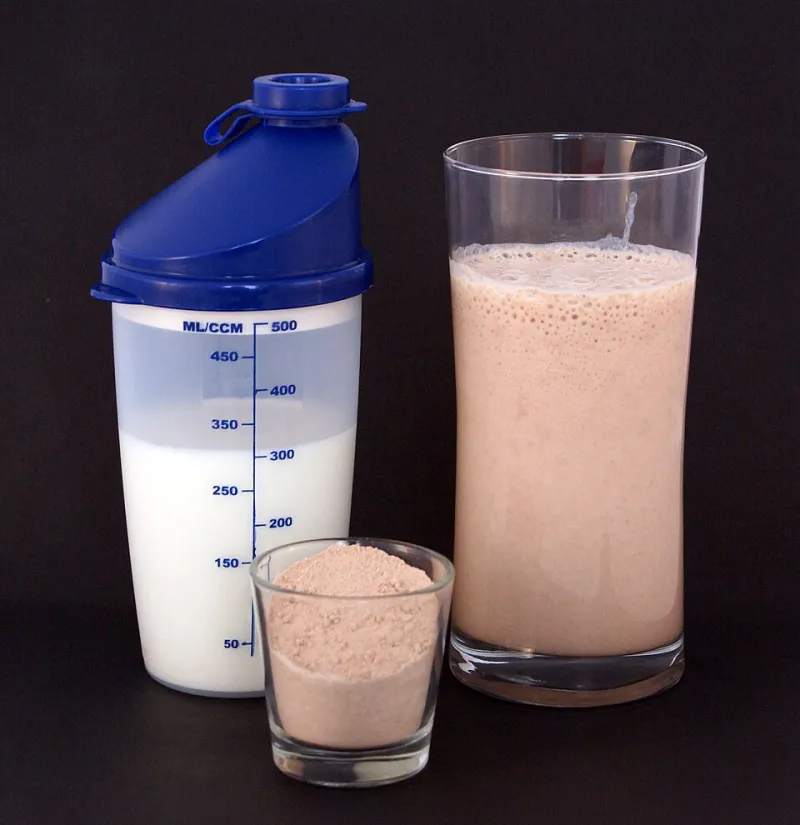
The Smartest Supplement You're Not Taking Seriously: Creatine's Surprising Role in Brain Health

Photo: 4TO SPAIN, CC BY-SA 4.0, via Wikimedia Commons
Creatine Has a Reputation Problem
Ask most people what creatine is for, and you'll get some version of the same answer: big muscles, gym gains, maybe a little water retention. It's the supplement that's been quietly sitting on the shelves of GNC since the '90s, largely associated with college athletes and weight room regulars. Which is a shame, because that reputation has been doing creatine a serious disservice.
Because here's the thing — your brain runs on creatine too.
Over the last decade or so, researchers have been quietly building a compelling case that creatine supplementation may support cognitive performance, memory, and even long-term neuroprotection, particularly in older adults. It's one of the most studied supplements in existence, and yet most of the mainstream wellness conversation has completely missed this chapter of the story.
Let's fix that.
What Creatine Actually Does in Your Body
First, a quick refresher on the basics. Creatine is a naturally occurring compound your body synthesizes primarily in the liver and kidneys, using amino acids like arginine and glycine. You also get it from dietary sources — red meat and fish are the biggest contributors. Once it's in your system, creatine plays a central role in energy production by helping regenerate ATP, the molecule your cells use as fuel.
Most people associate that energy function with muscle tissue, and yes, that's where roughly 95% of your body's creatine is stored. But the other 5%? That lives in your brain. And that's where things get interesting.
Neurons are energy-hungry cells. They burn through ATP constantly, and when energy supply gets disrupted — whether through aging, stress, or neurological disease — cognitive function can start to slip. Creatine's role in the brain's energy buffering system means it may be uniquely positioned to help maintain that supply, especially under conditions of stress or demand.
The Research: What Peer-Reviewed Studies Are Actually Saying
This isn't fringe science. A 2003 study published in Psychopharmacology found that creatine supplementation improved working memory and processing speed in healthy young adults following a vegetarian diet — a group with naturally lower baseline creatine levels. More recent work has expanded that inquiry to aging populations, where the findings are arguably even more relevant.
A 2022 meta-analysis in Nutrients reviewed multiple randomized controlled trials and found consistent evidence that creatine supplementation had a positive effect on memory performance, particularly in older adults over 66. The researchers noted that effects were most pronounced in tasks requiring short-term memory and fluid intelligence — the exact cognitive domains that tend to decline first with age.
There's also emerging interest in creatine's potential neuroprotective properties. Animal studies and early human trials have explored its role in conditions like traumatic brain injury, Parkinson's disease, and depression, with the hypothesis being that bolstering the brain's energy reserves may reduce cellular damage under neurological stress. The evidence here is still early-stage and shouldn't be overstated, but it's enough to keep neuroscientists actively interested.
Another angle worth noting: sleep deprivation research. A study out of the UK found that creatine supplementation appeared to mitigate some of the cognitive decline associated with a night of poor sleep. For anyone running on five hours and a lot of coffee — which, let's be honest, is a significant chunk of American adults — that's not nothing.
Who Benefits Most — and Who Might Not Notice Much
Here's an important nuance that often gets lost in the enthusiasm: not everyone responds to creatine supplementation the same way. Your baseline creatine levels matter a lot.
If you're a regular meat eater with already-adequate dietary creatine intake, the cognitive uplift from supplementation may be modest. But if you're vegetarian or vegan, older, or simply not getting much creatine through food, the gap between your baseline and optimal levels is larger — and supplementation is more likely to produce noticeable effects.
Age is another major factor. As we get older, the body's ability to synthesize creatine naturally tends to decline, and dietary intake often drops too (older adults tend to eat less red meat). That combination creates a scenario where supplementation could genuinely move the needle.
Safe Dosing: What the Evidence Supports
One of creatine's biggest advantages is its safety profile. It's been studied extensively for decades, and the research consistently shows it's well-tolerated at standard doses in healthy adults.
The typical protocol used in most cognitive studies is 3 to 5 grams of creatine monohydrate per day, taken consistently over several weeks. Some older research advocated for a "loading phase" of higher doses early on, but for brain health purposes, the lower steady-state approach appears sufficient and avoids the GI discomfort that higher doses can sometimes cause.
Creatine monohydrate — the plain, unflavored, inexpensive form — remains the gold standard. Despite what the supplement industry would love for you to believe, fancier, pricier forms like creatine HCL or buffered creatine haven't consistently outperformed it in head-to-head research. Save your money.
One practical note: creatine does cause your muscles (and to a lesser extent, your brain) to pull in more water. Staying well-hydrated is genuinely important, especially in the early weeks of supplementation.
Why Mainstream Wellness Culture Keeps Sleeping on This
Part of the issue is branding. Creatine got locked into the "bro supplement" category early, and the wellness industry tends to favor things that feel newer, more exotic, or more photogenic. A tub of white powder with a name that sounds vaguely scientific doesn't exactly scream "morning routine aesthetic."
But the data doesn't care about aesthetics. And increasingly, sports medicine physicians, neurologists, and registered dietitians are paying closer attention to creatine's broader applications — particularly for aging populations who might benefit from both the cognitive and physical effects simultaneously.
For older adults trying to maintain muscle mass and protect cognitive function, creatine may be one of the few supplements where the evidence supports both goals at once. That's a genuinely rare combination.
The Bottom Line
Creatine isn't a miracle drug. It's not going to reverse dementia or turn you into a chess grandmaster overnight. But the evidence that it supports brain energy metabolism, memory performance, and cognitive resilience — particularly in older adults and those with lower dietary intake — is real, peer-reviewed, and growing.
If you've been dismissing it as gym-only territory, it might be worth a second look. Sometimes the most boring, well-established supplements turn out to be the most interesting ones.