You've Been Drinking Milk Your Whole Life — So Why Are Your Bones Still at Risk?

The Stat That Should Stop You Mid-Sip
Pour yourself a glass of milk and consider this: the United States has one of the highest dairy consumption rates in the world, and also one of the highest rates of osteoporosis. That's not a coincidence you can chalk up to aging populations or sedentary lifestyles alone. Something more fundamental is going on — and the answer has been hiding in plain sight inside nutrition research for decades.
We've been told since grade school that calcium builds strong bones. Drink your milk. Eat your yogurt. Cheese is fine in moderation. The messaging is so deeply baked into American food culture that questioning it almost feels rebellious. But here's the thing: calcium is more like a construction crew that keeps showing up to a job site with no blueprints, no foreman, and no tools. It needs a whole support system to actually do its job.
Calcium Is Not the Boss of Your Bones
Bone tissue is living, constantly remodeling itself — breaking down old material and rebuilding new. Calcium is the primary mineral in that structure, sure. But the process of getting calcium into your bones (rather than just floating around in your bloodstream or, worse, depositing in soft tissues like arteries) depends heavily on a handful of cofactors that most Americans are flying blind on.
Let's break down the three that matter most.
Magnesium is probably the most underappreciated player here. About 60% of your body's magnesium is stored in bone, where it helps regulate calcium transport and activates vitamin D — the nutrient that controls how much calcium you actually absorb in your gut. Without adequate magnesium, vitamin D can't do its job properly, which means your calcium intake is essentially going to waste. Studies have found that low magnesium intake correlates with lower bone density, even when calcium intake looks fine on paper. The kicker? Most Americans don't hit the recommended daily intake for magnesium. We're talking about a gap that affects an estimated 48% of the population.
Vitamin K2 is where things get really interesting — and where the dairy narrative gets genuinely complicated. K2 activates a protein called osteocalcin, which acts like a molecular glue that binds calcium into bone matrix. Without K2, calcium circulates but doesn't anchor properly. Here's the irony: some fermented dairy products (like certain aged cheeses and a Japanese food called natto) are actually decent sources of K2. But pasteurized, low-fat American dairy — the kind most of us are actually drinking — contains very little of it. The same goes for conventional supplements. Most standard multivitamins include K1, which handles blood clotting, but skip K2 entirely.
Boron is the quiet one in this group. It doesn't get its own milk carton campaign, and you've probably never seen it on a supplement label at your local Walmart. But research suggests boron plays a meaningful role in how the body metabolizes both magnesium and calcium, and may help extend the half-life of vitamin D in the body. Low boron intake has been linked to increased calcium excretion — meaning your body is literally flushing the mineral you're trying to absorb. Nuts, leafy greens, and certain fruits are solid sources, but again, if your diet skews heavily toward processed foods, you're likely coming up short.
What's Actually Happening in American Diets
The typical American diet creates a perfect storm for bone fragility. We load up on calcium through dairy and fortified foods, but simultaneously:
- Eat diets high in sodium and processed grains, which increase calcium excretion through urine
- Consume excess phosphorus from sodas and packaged foods, which can interfere with calcium balance
- Spend too much time indoors (hello, vitamin D deficiency)
- Fall short on magnesium because of soil depletion and processed food reliance
- Get almost no K2 because fermented foods aren't exactly American staples
Then we wonder why fracture rates among older Americans remain stubbornly high despite decades of "Got Milk?" campaigns.
What Your Doctor's Bloodwork Might Be Missing
Standard bone health panels typically include a serum calcium test. And here's the trap: serum calcium almost always looks normal, even when your bones are quietly losing density. That's because your body tightly regulates calcium in the blood — it will literally pull calcium from your bones to keep blood levels stable if dietary intake drops. So a normal calcium reading on your labs doesn't mean your skeleton is happy.
More informative markers to ask your doctor about:
- 25-hydroxyvitamin D — the standard vitamin D test, which also reflects your capacity to absorb calcium
- Serum magnesium — though even this can be misleading, since most magnesium is intracellular; a more accurate option is RBC (red blood cell) magnesium
- Bone density scan (DEXA) — recommended for women over 65 and men over 70, but earlier if you have risk factors
- Osteocalcin — a marker of bone formation activity that can hint at K2 status indirectly
None of these are exotic or expensive, but they require you to actually ask. Many primary care visits don't go beyond the basics unless you push.
So Should You Ditch Dairy?
Not necessarily — this isn't an anti-dairy manifesto. Dairy can be part of a healthy diet, and calcium does matter. But treating dairy as a complete bone health solution is where the logic breaks down. If you're relying on three glasses of skim milk a day to protect your skeleton and ignoring everything else, you're leaving a lot on the table.
A more complete approach looks like this:
- Diversify your calcium sources — dark leafy greens, sardines with bones, almonds, and fortified plant milks all contribute
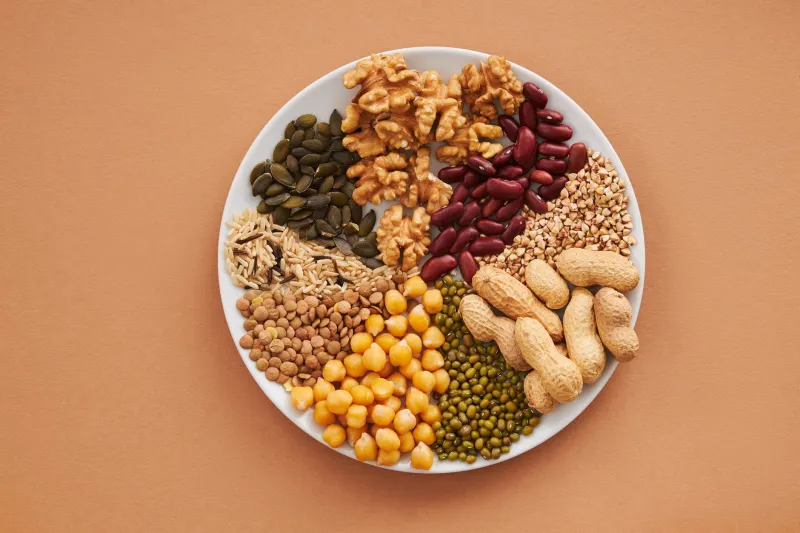
- Prioritize magnesium-rich foods — pumpkin seeds, black beans, spinach, and dark chocolate (yes, really)
- Seek out K2 — natto if you're adventurous, or a supplement that specifies MK-7 form, which has better bioavailability than MK-4
- Get your vitamin D tested — supplementing without knowing your baseline is guesswork
- Consider a quality boron supplement — 3mg daily is the commonly studied dose, and it's inexpensive
The Bigger Picture
Bone health is one of those areas where the simplified public health message — "eat more calcium" — made sense as a starting point but never told the full story. Nutrition science has come a long way since the dairy lobby helped shape federal dietary guidelines in the 1980s and 90s. We now understand that minerals don't work in isolation, that cofactors are often more rate-limiting than the primary nutrient itself, and that soil quality, food processing, and lifestyle factors can completely undermine even a "good" diet.
Your bones are with you for life. They deserve more than a one-nutrient strategy.